
Do You Need a Permit for a Greenhouse or Hoop House?
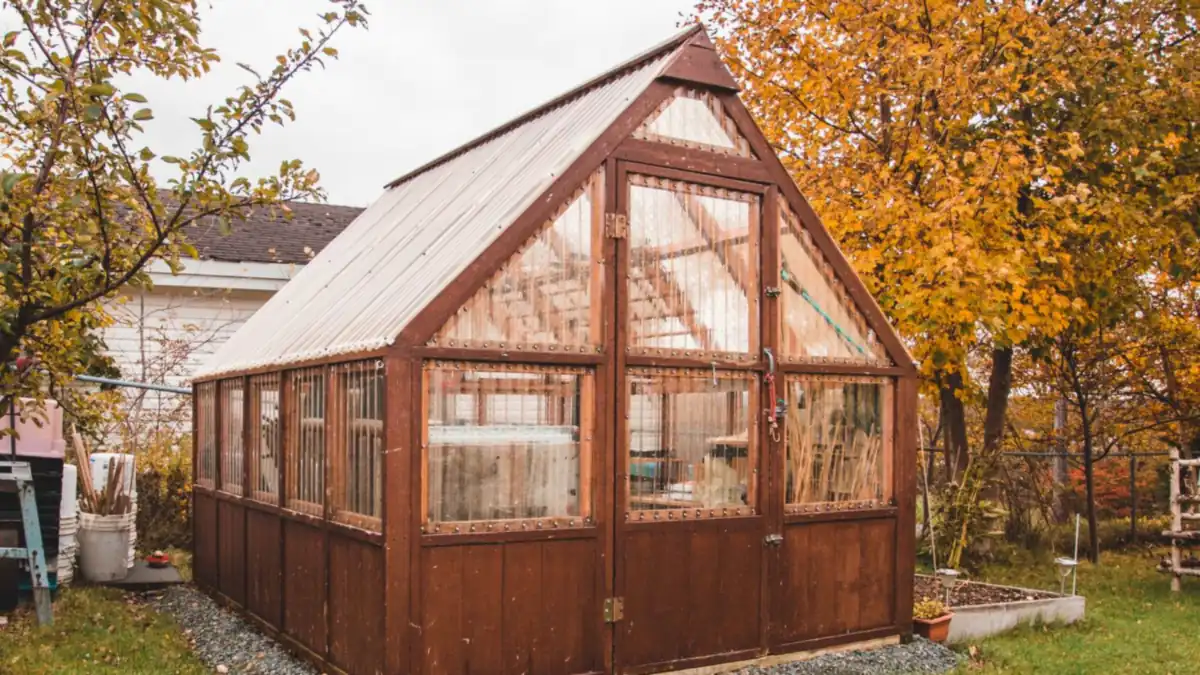
How big can a greenhouse be without a permit?
Most US building codes start from the International Residential Code (IRC), a model code that states and cities adopt and amend. Its section R105.2 exempts from building permits one-story detached accessory structures, other than storm shelters, with a floor area of no more than 200 square feet. Many local codes treat a backyard greenhouse as one of these accessory structures, so 200 square feet (for example 10 by 20 feet) is a common starting point, not a national rule.
Local limits move in both directions. Here is how the places we checked handle it:
| Place | No building permit needed when | Conditions |
|---|---|---|
| IRC model code (R105.2) | One-story detached accessory structure up to 200 sq ft | Applies only where adopted; local amendments change it. |
| Boulder County, Colorado | Greenhouse up to 120 sq ft | No more than 12 feet high, no utilities, limited number per parcel. |
| Larimer County, Colorado | Agricultural building under 200 sq ft, or with shade cloth or poly roofing up to 6 mil | No public access; greenhouses still need engineering. |
| Pennsylvania (state code) | Greenhouse under 1,000 sq ft accessory to a detached one-family home | A municipality can still require a permit by ordinance. |
| New Jersey (state code) | Temporary hoophouse used only for growing or storing live plants | No foundation or permanent anchoring, no stored chemicals, no wider than 31 feet. |
| New Orleans, Louisiana | The city’s guide gives no size exemption | Greenhouses and hoophouses go through an accessory structure permit. |
The IRC exemption also says that an exempt structure must still follow the code and every other local law. “No permit” does not mean “no rules.”
Hoop houses and temporary greenhouses
A hoop house (also called a high tunnel or polytunnel) is usually an unheated frame of steel or plastic pipe covered with polyethylene. The Fargo-area Backyard Season Extenders brief notes that hoop houses are often temporary and need no foundation, while greenhouses are usually permanent and heated. Some codes write a separate rule for the temporary kind.
New Jersey has the clearest one we found. Under N.J.A.C. 5:23-3.2(d)4, as explained by the state Department of Agriculture, a temporary greenhouse used only for producing or storing live plants needs no building permit if:
- there is no permanent anchoring system or foundation;
- no solvents, fertilizers, gases or other chemicals or flammable materials are stored in it;
- it is no wider than 31 feet, with no more than 150 feet from any point to a door or fully accessible wall; and
- the covering is no thicker than six mils and can be broken through for escape.
The fact sheet defines a permanent anchoring device as one not readily dislodged, such as concrete, and says the exemption applies to all temporary non-retail greenhouses, whether on commercial farms or at homes. Signed and sealed plans are not required for a hoophouse that qualifies.
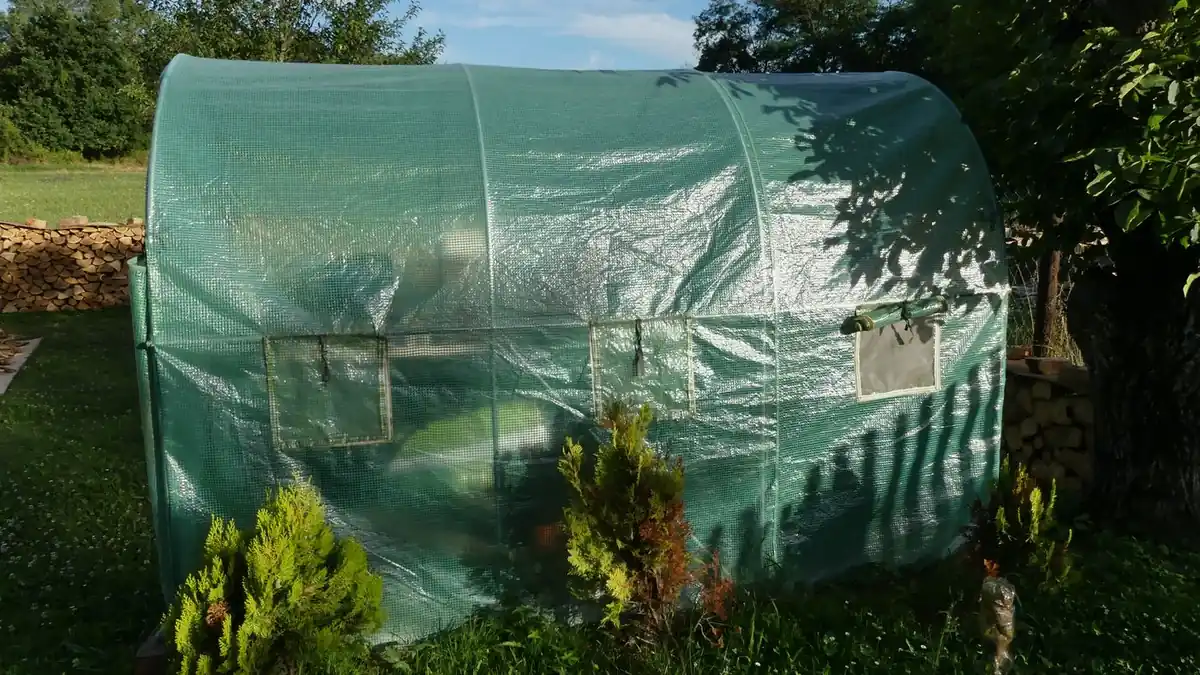
Larimer County, Colorado takes a similar approach for farms: an agricultural building with shade cloth or poly roofing up to 6 mil and no public access needs no building permit.
What triggers a permit anyway
- Electricity, heat, fans and water. New Jersey requires an electrical or mechanical permit for a heater or fan, and a plumbing permit for a backflow preventer if the watering system connects to drinking water or an irrigation well, even when the hoophouse itself is exempt. Boulder County’s exemption covers only greenhouses with no utilities.
- A foundation. In New Orleans, a gravel floor does not count as a substantial permanent structure, but poured concrete does, and foundation drawings are then stamped by a Louisiana architect or engineer.
- Size and height. Above the local floor area or height limit, expect a permit.
- Visitors and sales. Larimer County’s exemption ends where there is public access, and New Jersey’s applies only to non-retail greenhouses. New Orleans requires a Certificate of Occupancy for a commercial greenhouse.
- Wind and snow. New Orleans requires greenhouses and other accessory structures to withstand a basic design wind speed of 140 mph. Larimer County says greenhouses need engineering even though they have lighter requirements.
Farm and agricultural exemptions
Many states exempt agricultural buildings from the building code, but the definitions are narrow. Pennsylvania’s Uniform Construction Code does not apply to an agricultural building, defined as a structure used to store farm implements, hay, feed, grain or other agricultural or horticultural products, or to house farm animals. The definition excludes habitable space, spaces where products are processed, treated or packaged, and places of occupancy by the general public. Whether a production greenhouse fits is a question for your code official; separately, Pennsylvania excludes greenhouses under 1,000 square feet that are accessory to a detached one-family home. Larimer County lists greenhouses among agricultural buildings. If you farm, ask your county whether an agricultural exemption form applies before you build.
Zoning still applies
A building permit and zoning are separate. Even an exempt greenhouse has to meet your zoning rules on setbacks, lot coverage, height and how many accessory structures you may have. New Jersey’s guidance says a hoophouse built for agricultural production must fit the permitted uses of its zone. In New Orleans, an accessory structure cannot sit in front of the abutting structure’s front or side building line, and a greenhouse on a lot with no house is possible only where agriculture is a permitted use, after a change of use. See how to find your zoning and agricultural zoning explained. An HOA can add its own limits; see homeowners associations.
Renters, leased lots and community gardens
You usually need the owner’s permission to build. New Orleans requires renters to provide a notarized affidavit from the property owner, and its Growing Green lease program allows only temporary accessory structures, not permanent ones. If your garden is on borrowed or city land, read the agreement first; see land access and adopt-a-lot programs.
Checklist before you build a greenhouse
- Ask your building department which code edition it uses and the size and height limit for an accessory structure, and whether a greenhouse or hoop house counts as one.
- Decide on the foundation: gravel or ground anchors versus poured concrete can change the answer.
- Plan electricity, heat, fans and water separately; they usually need their own permits and a licensed installer.
- Check zoning setbacks, lot coverage and the number of accessory structures allowed.
- Check wind and snow ratings for a kit, and keep the manufacturer’s specifications.
- Get the owner’s written permission if you rent or lease the land, and read your HOA rules.
Frequently asked questions
How big of a greenhouse can you build without a permit?
There is no single national number. Many local codes follow the model residential code and exempt a one-story detached accessory structure up to 200 square feet, but Boulder County, Colorado sets 120 square feet, 12 feet high and no utilities, and Pennsylvania’s state code leaves out greenhouses under 1,000 square feet at a one-family home unless a local ordinance says otherwise. Ask your building department for your number.
Do I need a permit for a greenhouse in my backyard?
Often not for a small, unheated greenhouse with no wiring or plumbing that fits under your local size and height limit. You usually do if it is larger, sits on a concrete foundation, has electricity, heat or a water connection, or is open to customers.
Do I need a permit for a hoop house?
It depends on whether your code treats it as temporary. New Jersey exempts a temporary hoophouse used only for growing plants from building permits if it has no permanent anchoring or foundation, is no wider than 31 feet and meets the other listed conditions. Larimer County, Colorado exempts agricultural buildings with poly roofing up to 6 mil and no public access.
Is a greenhouse considered a permanent structure?
It depends on how it is built and how your code defines it. New Jersey’s guidance treats a hoophouse with no permanent anchoring system or foundation as temporary, and defines a permanent anchoring device as one not readily dislodged, such as concrete. In New Orleans, a gravel floor is not a substantial permanent structure but poured concrete is.
Does a greenhouse kit need a permit?
A kit gets no automatic exemption: the same size, height and utility limits apply. In New Orleans a kit can let you skip stamped engineering plans, but you still need wind ratings, proof of tie-downs and poles set 2 feet deep, and still apply for a permit.
Can I run electricity to my greenhouse without a permit?
Usually not. Even where the structure itself needs no building permit, wiring, heaters, fans and water connections generally need their own permits. New Jersey’s exemption says so explicitly, and New Orleans requires a licensed professional for electrical, plumbing or gas work.
Does zoning still apply if no building permit is needed?
Yes. A building-permit exemption does not override zoning. Setbacks, lot coverage, height and where an accessory structure may sit on the lot still apply, and New Jersey’s guidance notes that a hoophouse use must fit the permitted uses of its zone.
Can I put a greenhouse on a lot with no house?
Sometimes. New Orleans allows it where agriculture is a permitted use: you first apply for a change of use to agriculture as the principal use, then for the accessory structure permit. Other cities may not allow an accessory structure without a main building.
Official sources
- City of Federal Way, Washington: residential permit exemptions, quoting International Residential Code section R105.2 (one-story detached accessory structures up to 200 square feet)
- Pennsylvania Code, Title 34, section 403.1(b) (Uniform Construction Code scope, exclusions for structures accessory to a detached one-family dwelling and for agricultural buildings) and section 401.1 (definition of agricultural building)
- New Jersey Department of Agriculture with the Department of Community Affairs: Fact Sheet for Temporary Greenhouses under the New Jersey Uniform Construction Code (revised June 2015), on N.J.A.C. 5:23-3.2(d)4
- City of New Orleans, Urban Agriculture: On Farm Guide, How to Get Your Greenhouse Permitted (last revised December 2025)
- Boulder County, Colorado, Building Safety, and Larimer County, Colorado, Community Development, as summarized on our building codes guide
- Cass Clay Food Partners (Fargo, North Dakota area): Urban Agriculture and Backyard Season Extenders (amended June 2020)
- Not checked for this page: the 2024 International Residential Code, the International Building Code exemption list for non-residential buildings, state building codes other than Pennsylvania and New Jersey (including Michigan’s amended version of R105.2), and the current text of N.J.A.C. 5:23-3.2(d) itself