
Florida Cottage Food Law (2026): What You Can Sell, Limits and Labels
At a glance
- License or permit
- None. A cottage food operation is exempt from the FDACS food permit if it follows section 500.80. No registration or fee is required.
- Annual sales limit
- $250,000 in gross sales, counting all locations and products
- Allowed foods
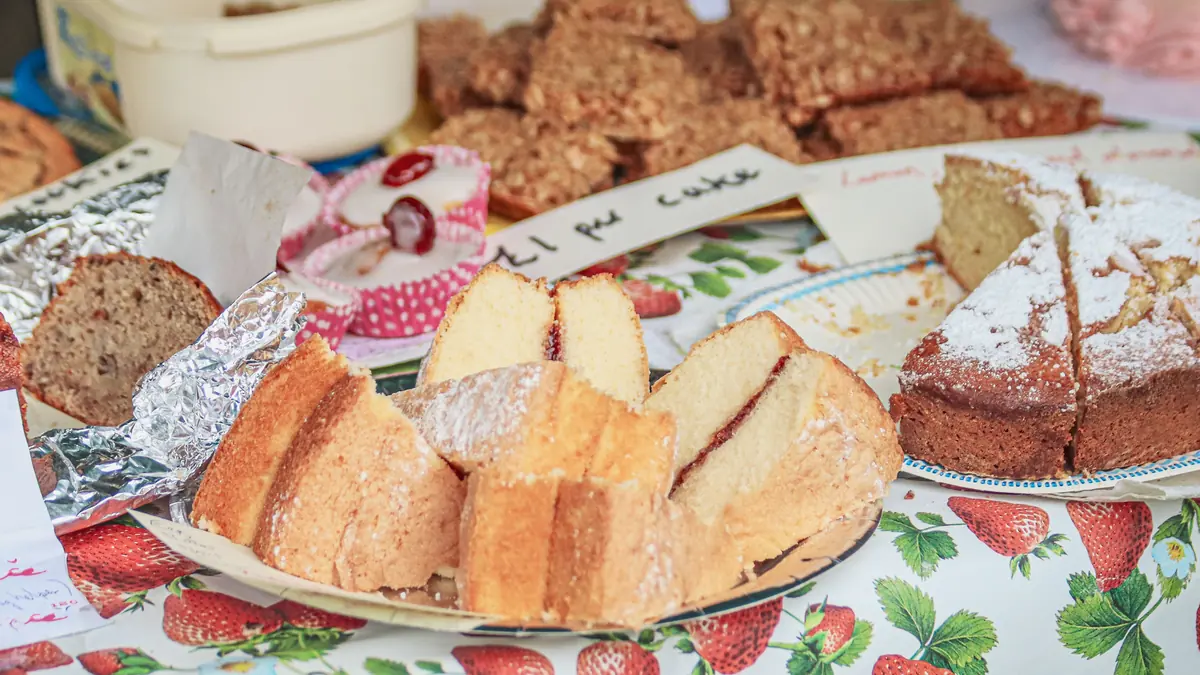
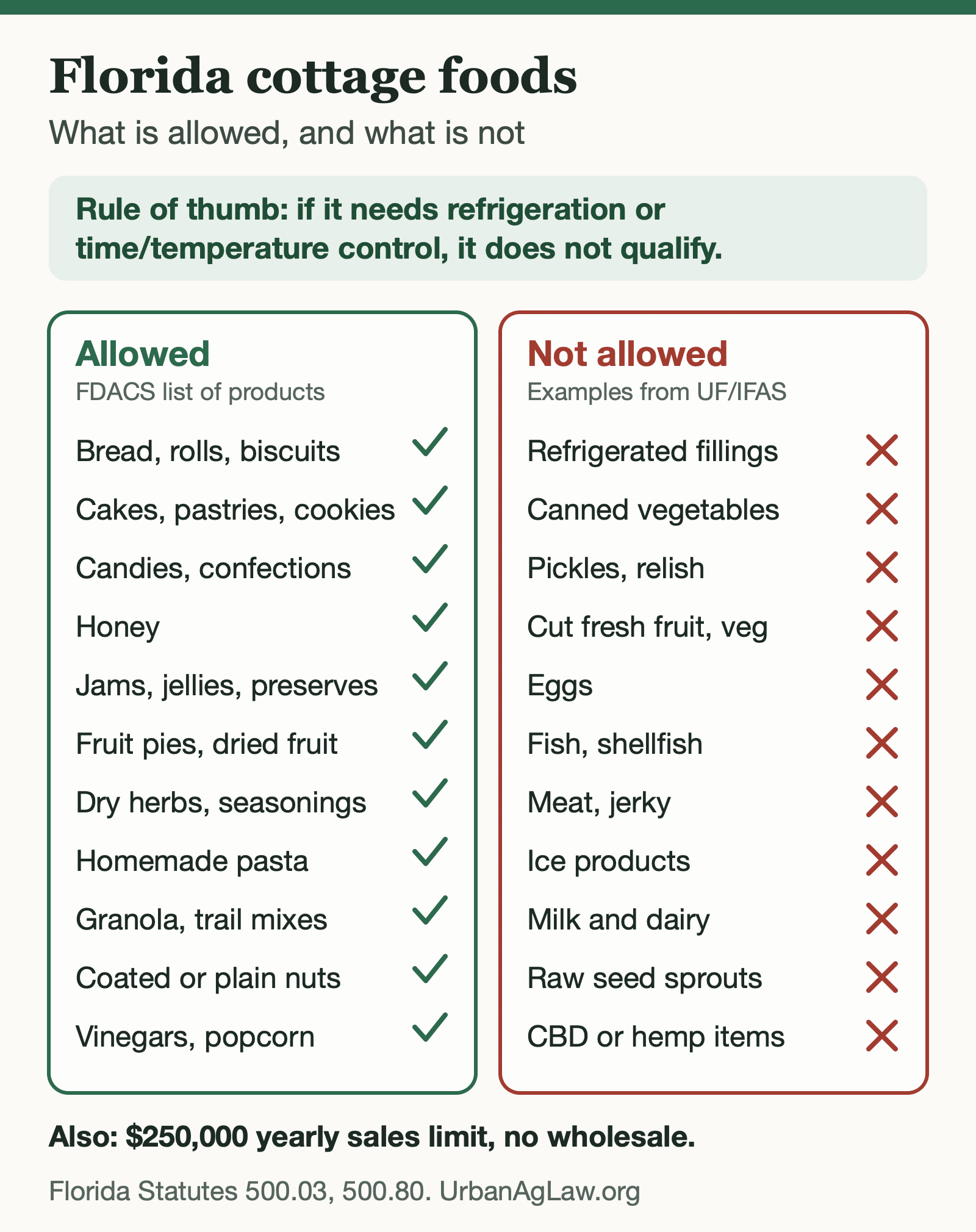
- Foods that do not need time or temperature control for safety, such as bread, cookies, cakes, candy, jams, honey, granola, nuts, popcorn, dry mixes, pasta and vinegar
- Not allowed
- Foods that need refrigeration or are otherwise potentially hazardous, such as cheesecake, canned vegetables, pickles, meat, fish, cut fruit and dairy
- Where you can sell
- Directly to consumers, in person, online or by mail order, with delivery by you, to an event venue, or by USPS or a commercial carrier. No wholesale.
- Training required
- Not by state law. Some markets and venues ask for it.
Who this law covers
A cottage food operation is a person, or a business with a natural person as an owner, that produces or packages cottage food products at that person’s residence. Section 500.80 of the Florida Statutes lets these operations skip the food permit that other food businesses need. You still have to follow the other rules of Chapter 500, the Florida Food Safety Act. The Florida Department of Agriculture and Consumer Services (FDACS) does not inspect cottage food operations, but it can investigate complaints.
What you can sell
Florida defines a cottage food product as food that is not time or temperature controlled for safety and is not a potentially hazardous food (section 500.03 of the Florida Statutes). In practice, that means shelf-stable, low-risk foods. FDACS lists these examples:
- Loaf breads, rolls and biscuits
- Cakes, pastries and cookies
- Candies and confections
- Honey
- Jams, jellies and preserves
- Fruit pies and dried fruits
- Dry herbs, seasonings and mixtures
- Homemade pasta
- Cereals, trail mixes and granola
- Coated or uncoated nuts
- Vinegar and flavored vinegars
- Popcorn and popcorn balls
FDACS does not publish a full list of banned foods. University of Florida extension guidance gives these examples of products that do not qualify: baked goods that need refrigeration (custard, cream cheese icing or filling), canned fruits, vegetables and chutneys, pickles and relish, cut fresh fruit and vegetables, eggs, fish and shellfish, meat and jerky, ice products, milk and dairy products, raw seed sprouts, and CBD or hemp items. The same guidance says the law covers human food only, so pet treats do not qualify. Products must be sold from your own premises, so you may only sell items stored there.
If you are not sure about a product, ask FDACS before you sell it (see the contact details under Official sources).
Sales limits and licensing
The annual gross sales limit is $250,000. The limit has been $250,000 since the Home Sweet Home Act (CS/HB 663) took effect on July 1, 2021. Before that it was $50,000. Sales at every location count toward the limit, no matter how many people work in the business or how many products you sell. Gross sales means total sales, not profit. You must give FDACS written records of your annual gross sales if it asks.
You do not apply for a state license or pay a state fee. The exemption does not cover taxes: you must still follow any state or federal tax law that applies to you, and the University of Florida suggests asking your local tax collector whether you need to collect sales tax or hold a local business tax receipt. If your sales go over $250,000, you no longer qualify and need an FDACS food permit.
FDACS may inspect only after it receives a complaint. If you refuse entry or inspection, FDACS can take disciplinary action under section 500.121.
Labeling requirements
You may only sell prepackaged food with a label. Each label must include:
- the name and address of your cottage food operation;
- the name of the product;
- the ingredients, in descending order of weight;
- the net weight or net volume;
- allergen information as required by federal law (the federal list of major allergens includes milk, eggs, fish, shellfish, tree nuts, peanuts, wheat, soybeans and sesame);
- nutrition information, but only if you make a nutritional claim;
- this statement, in at least 10-point type and in a color that contrasts with the label background: “Made in a cottage food operation that is not subject to Florida’s food safety regulations.”
According to FDACS, free samples for tasting are allowed if they are prepackaged.
Where you can sell
- Directly to consumers: in person, from your home, at farmers markets and similar events, subject to each market’s own rules.
- Online and by mail order: allowed. You may deliver in person to the customer, to a specific event venue, or by the U.S. Postal Service or a commercial mail delivery service. UF/IFAS extension guidance says this includes shipping across state lines.
- Wholesale: not allowed. You may not sell, offer for sale or deliver cottage food products at wholesale. UF/IFAS guidance adds that consignment is not allowed, and that a permitted store or mobile food vendor cannot resell cottage foods.
Training and insurance
Section 500.80 does not require food handler training or a food manager certificate, and the FDACS cottage food page does not mention one. Some farmers markets, venues and retailers set their own rules and may ask for a food safety certificate or proof of insurance. State law does not require liability insurance for cottage food, but product liability coverage is worth pricing. See our guide to liability, risk and insurance.
Local rules and HOAs
Florida has taken regulation of cottage food operations away from local governments. Under section 500.80(6), a city or county may not ban your operation or regulate how you prepare, process, store or sell cottage food. Your operation must still meet the home-based business conditions in section 559.955. For general background, see our planning and zoning guide.
The home-based business law does not override the governing documents of condominiums, cooperatives or homeowners associations under Chapters 718, 719 and 720 (section 559.955(5)). If you live in an HOA or rent, read your HOA covenants and lease first.
Frequently asked questions
Do I need a license to sell baked goods from home in Florida?
No. A cottage food operation that follows section 500.80 is exempt from the FDACS food permit, and there is no state registration or fee.
Can I sell cottage food online and ship it?
Yes. Florida allows internet and mail-order sales, with delivery by you, to an event venue, or by USPS or a commercial carrier. Every product must be prepackaged and carry the required label.
Can I sell to stores or restaurants?
No. Wholesale sales are not allowed. You can only sell to consumers.
Can I make cheesecake, pickles or salsa?
No. Foods that need refrigeration, and canned or pickled vegetable products, do not qualify as cottage foods in Florida. If you want to sell them, you need an FDACS food permit and a licensed kitchen.
Can my city stop me from running a cottage food business?
No. State law prevents local governments from banning or regulating cottage food operations. You still have to meet the home-based business conditions in section 559.955, and private HOA rules can still apply.
Note on conflicting sources
Some commercial guides say Florida requires registration, a fee, an inspection or a food handler card for cottage food, or that the $250,000 limit is new in 2026. None of this matches the statute or FDACS. The limit rose to $250,000 in 2021, and section 500.80 sets no registration, fee or training. The history note of the section also lists a 2025 session law (chapter 2025-22, section 89); the limit, label text and sales rules described on this page are those in the 2025 edition of the statute. Older extension and agency documents may show lower limits, so use the statute and the FDACS page. For anything that changed after our review, check the Florida Senate website and FDACS.
Official sources
- FDACS: Cottage Foods (Division of Food Safety, 1-800-435-7352, [email protected])
- Florida Statutes §500.80: Cottage food operations (2025 edition, Florida Senate)
- Florida Statutes §559.955: Home-based businesses
This page was checked against the text of Florida Statutes §500.80 (2025 edition) and the FDACS cottage food page. Definitions come from section 500.03 and the 2021 change from CS/HB 663 (chapter 2021-211). Later changes should be confirmed on the Florida Senate website and the FDACS page.
Secondary source (extension guidance, used only to cross-check, not an official text): UF/IFAS, Cottage Food in Florida (publication FS425), revised July 2021. Examples of banned foods, the consignment rule and the market and venue notes on this page come from it.